
Twice a year is the standard advice. It comes from a 1950s toothpaste advertisement that became conventional wisdom. For most adults with healthy teeth and gums, twice a year is a reasonable starting point. But it is not a universal rule – some people need more, some can do with less, and knowing which category you fall into saves both money and unnecessary appointments.
Who Can Visit Once a Year
If you have no active gum disease, a low history of cavities, no dental implants, and no orthodontic treatment, an annual check-up is often sufficient. This assumes good home care – brushing twice daily, flossing, and no significant dietary risk factors. Your dentist will confirm at your first visit whether you are in this category.
Who Needs More Than Twice a Year
Several conditions change the calculation:
- Active periodontal disease – gum disease patients are typically seen every 3-4 months during treatment. The bacteria that cause gum disease re-establish within this window if not disrupted. For patients receiving periodontal care in Muscat, the maintenance schedule is part of the treatment, not optional.
- Dental implants – especially in the first year. Implants can fail if early bone loss or infection goes undetected. After the first year with a stable implant, standard check-up frequency usually applies.
- Orthodontic treatment – braces and aligners create additional plaque traps. Patients in active orthodontic treatment should be seen more frequently.
- High caries risk – patients with dry mouth (often medication-related), high sugar intake, or a history of frequent cavities benefit from 3-4 monthly visits.
- Diabetes – diabetics have a significantly higher risk of gum disease and slower healing. More frequent monitoring is standard practice.
- Smokers – smoking masks gum disease symptoms and slows healing. More frequent checks catch problems earlier.
- Children – every 6 months from when the first teeth appear. Children’s teeth are more susceptible to decay than adult teeth, and early detection matters.
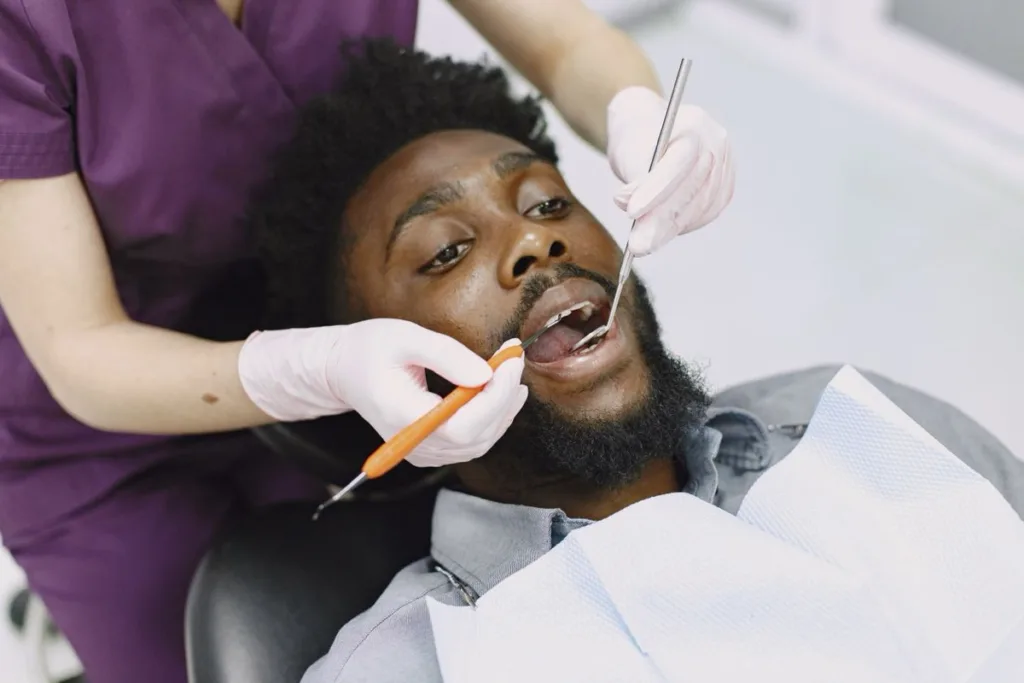
What Actually Happens at a Check-up
A lot of adults avoid the dentist because they are not sure what to expect. A routine check-up at Crown Dental typically involves:
- A visual inspection of all teeth, gums, and soft tissue
- Checking for cavities, cracked teeth, and worn enamel
- Gum depth measurements if there is any concern about periodontal health
- X-rays when needed – not at every visit, but periodically to check what cannot be seen visually
- A scale and polish to remove tartar buildup that regular brushing does not remove
The whole appointment is 30-45 minutes for most patients. It should not be uncomfortable. If you have had painful dental experiences before, tell the team at Crown Dental before the appointment – they can adjust their approach.
Signs You Should Go Sooner
Do not wait for your next scheduled check-up if you notice any of these:
- Gums that bleed every time you brush, for more than 2 weeks
- New tooth sensitivity to hot, cold, or sweet
- A tooth that feels loose
- Persistent bad breath that does not clear with brushing
- Pain when biting or chewing
- Any swelling in the gum or jaw
These are not emergencies in most cases, but they are not things to monitor and see. A problem caught at this stage is almost always less expensive and less invasive to treat than the same problem six months later.
Frequently Asked Questions
How often should children see the dentist?
Every 6 months from when the first tooth appears, or by age one – whichever comes first. Children’s enamel is thinner and more susceptible to decay than adult teeth, and the primary teeth hold space for permanent ones. Early dental visits also help children become comfortable with the environment, which matters for their adult dental habits.
My gums bleed when I brush. Should I go now or wait for my next check-up?
Go now if it has been happening for more than 2 weeks. Bleeding gums are the most common sign of gum disease, and gum disease is progressive – it does not resolve on its own. Caught early, it is straightforward to treat. Left alone, it leads to bone loss and, eventually, tooth loss. It is one of the leading causes of tooth loss in adults and one of the most preventable.
Do I still need dental check-ups if I have dentures or no natural teeth?
Yes, though the focus shifts. Annual visits allow the dentist to check the fit of dentures (bone loss continues without teeth, which changes how dentures sit), inspect soft tissue for any abnormalities, and assess gum and jaw health. Patients with dental implants still need regular check-ups to monitor the implant and surrounding bone.
Is it worth going to the dentist if nothing hurts?
Yes – and this is the point. By the time a cavity hurts, it has usually reached the pulp and requires a root canal rather than a simple filling. By the time gum disease is painful, bone loss has already occurred. Dentistry’s best outcomes happen before symptoms appear. The check-up exists specifically to catch problems in the window when they are still small.
Book a Check-up at Crown Dental, Muscat
Crown Dental is at Aqar Building, Al Ghubrah Street, Muscat. Routine check-ups, specialist consultations, and dental implant assessments all available. Call +968 95048486 or book online.